The Pulse of Living Interfaces
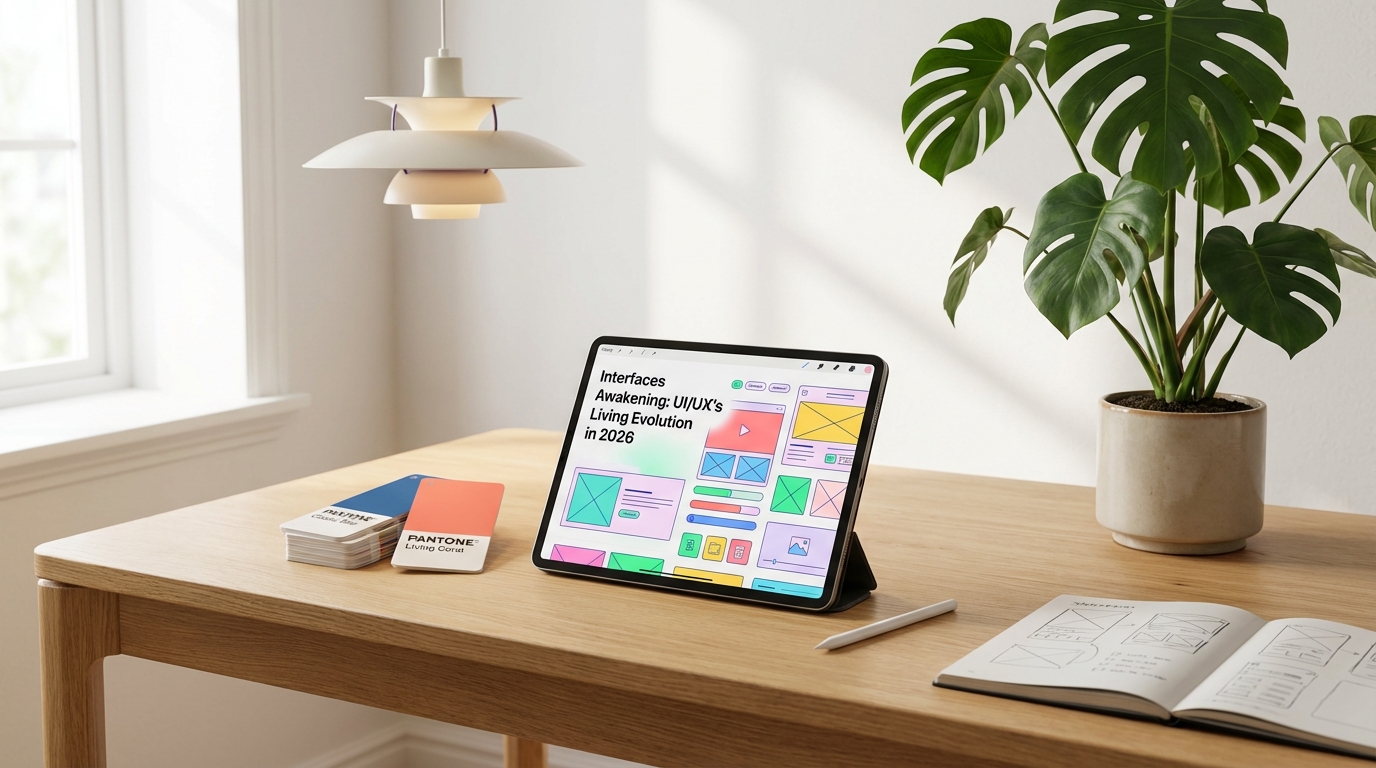
In 2026, interfaces are no longer passive canvases but living entities, reshaping themselves to the rhythm of user context, emotion, and environment. This shift, foreseen by designers where 32% anticipate real-time personalization as a major force, marks a departure from static layouts toward systems that breathe with behavior[1]. Predictive insights suggest 70% of digital experiences will incorporate context-aware elements by year-end, driven by AI's maturation into collaborative partners rather than mere tools[1][2].
Consider Spotify's evolving “Mood and Moments” playlists, which now attune to weather, activity, and subtle stress signals via integrated sensors—a glimpse into interfaces that anticipate needs before they surface[2]. Yet this vitality demands vigilance: privacy transparency becomes non-negotiable, as ethical design prevents the creep of surveillance into seamlessness. Agencies poised for this era must weave human-centered ethics into their core, ensuring adaptation enhances trust rather than erodes it.
The broader implication? UI/UX is evolving from screen-bound artifacts to ambient ecosystems. As one designer notes, “everyone should see different stuff based on their preference and activities,” heralding a moment-based personalization that spawns thousands of micro-variations[1]. This isn't mere convenience; it's a philosophical pivot, where digital spaces mirror the fluidity of lived experience.
Adaptive Transparency and Liquid Motion
At the forefront stands liquid glass and adaptive transparency, where surfaces flex with light, motion, and context, evoking organic materials over rigid pixels. iOS 26's implementations demonstrate cards that subtly refract as content glides beneath, navigation that docks intuitively to hand dominance, and buttons that morph in fluid transitions[2]. This liquid motion reduces cognitive friction, turning interactions into intuitive dances that evoke emotion and retention.
Orizon Design predicts navigation shrinking or dissolving reactively, freeing real estate for content while prioritizing behavioral cues over fixed hierarchies[2]. Imagine floating toolbars that anticipate gesture cadence, appearing only when summoned—ultra-contextual navigation that prioritizes clarity in mobile realms[3]. Marketers, take note: these elements craft e-commerce flows that captivate, blending seamless utility with sensory delight.
Yet elegance here lies in restraint. Designers emphasize user-controlled flow, respecting reduced-motion preferences and offering escape hatches from relentless animation[4]. This balance elevates liquid interfaces from gimmick to genuine empathy, challenging agencies to design with intent: motion as choice, not imposition. In a landscape where 23% foresee micro-interactions dominating, the thoughtful orchestration of fluidity will distinguish the memorable from the mundane[1].
2026 UI/UX is less about screens and more about sensation, less about layout and more about moment-to-moment clarity.
This trend underscores a deeper truth: as interfaces gain sentience, they must honor human agency, transforming potential overload into harmonious extension.
Immersive Depths and AI Symbiosis
Parallel to fluidity rises immersive 3D and spatial design, propelled by WebGL and AR advancements. Nike's interactive shoe try-ons and IKEA's virtual room tours exemplify how layered, depth-rich experiences drive conversions by bridging digital and physical realms[3]. By 2026, expect 3D elements to permeate retail and workspaces, with multimodal inputs—touch, voice, gesture, vision—orchestrating blended interactions[2].
- AR previews that simulate real-world fit, enhancing purchase confidence.
- Spatial computing for mixed-reality day-to-day, dissolving screen boundaries[6].
- AI agents acting as copilots, handling tasks in the background while disclosing their presence transparently[1][4].
AI personalization amplifies this immersion, shifting from segmented users to hyper-granular, real-time adaptations based on time, stress, or errors[2]. With 73% of designers viewing AI as a collaborator, generative UX co-designs experiences on-the-fly, enabling agile teams to deploy vast variation libraries[1]. Figma's trends echo this vibrancy: bold typography, neon palettes, and Y2K-inspired gradients fuel dopamine design for lifestyle brands like Glossier and Lush[3].
Thought-provoking here is AI's dual edge. While 60% anticipate agentic AI taking autonomous actions, trust emerges as the crux—necessitating accessible, legible interfaces with clear focus indicators and screen-reader harmony[1][7]. Agencies must foster cross-functional squads, blending data science with empathetic design to navigate this symbiosis without sacrificing depth for accessibility.
Bold Aesthetics Meet Ethical Imperatives
Visually, 2026 pulses with high-energy aesthetics: hyper-realistic textures fused with surrealism, kinetic fonts, and vibrant neons that command attention[3]. This bold palette, embraced by Samsung and Headspace, counters minimalism's fatigue, injecting emotional resonance into lifestyle interfaces[1][3]. Yet counter-trends like intentional imperfection—hand-built textures rejecting AI polish—signal a craving for authenticity amid generated abundance[5].
Ethical layers deepen the narrative. Privacy-first patterns, cited by 18% of designers, pair with transparent AI disclosure (47%), ensuring adaptive systems don't veer into opacity[1]. NN/g's State of UX warns that surface-level design is commoditized by AI tools; true differentiation demands curated taste, research-driven context, and critical judgment[7]. As UI production cheapens via design systems, deeper experiences—those mediating interactions through intelligent layers—will command loyalty.
Agencies face a provocation: in this alive era, how will you cultivate taste that AI can't replicate? By prioritizing legibility, user sovereignty, and systemic thinking, brands can transcend trends, forging interfaces that not only adapt but resonate on a human scale.
Toward a Sentient Digital Horizon
As 2026 unfolds, UI/UX's awakening invites reflection: what does it mean for technology to feel alive? These trends—context-aware adaptability, liquid fluidity, immersive depths, and ethical AI—collectively herald interfaces as extensions of intent, not interruptions. Businesses integrating them thoughtfully will not merely engage but enchant, fostering loyalty in a hyper-personalized world.
The challenge is profound: amid AI's rise, human nuance remains irreplaceable. Design deeper, with clarity and empathy as north stars, to shape digital experiences that honor our complexity. In this evolution, the most enduring interfaces will be those that listen—truly, dynamically, respectfully.