The Depth of Imperfection
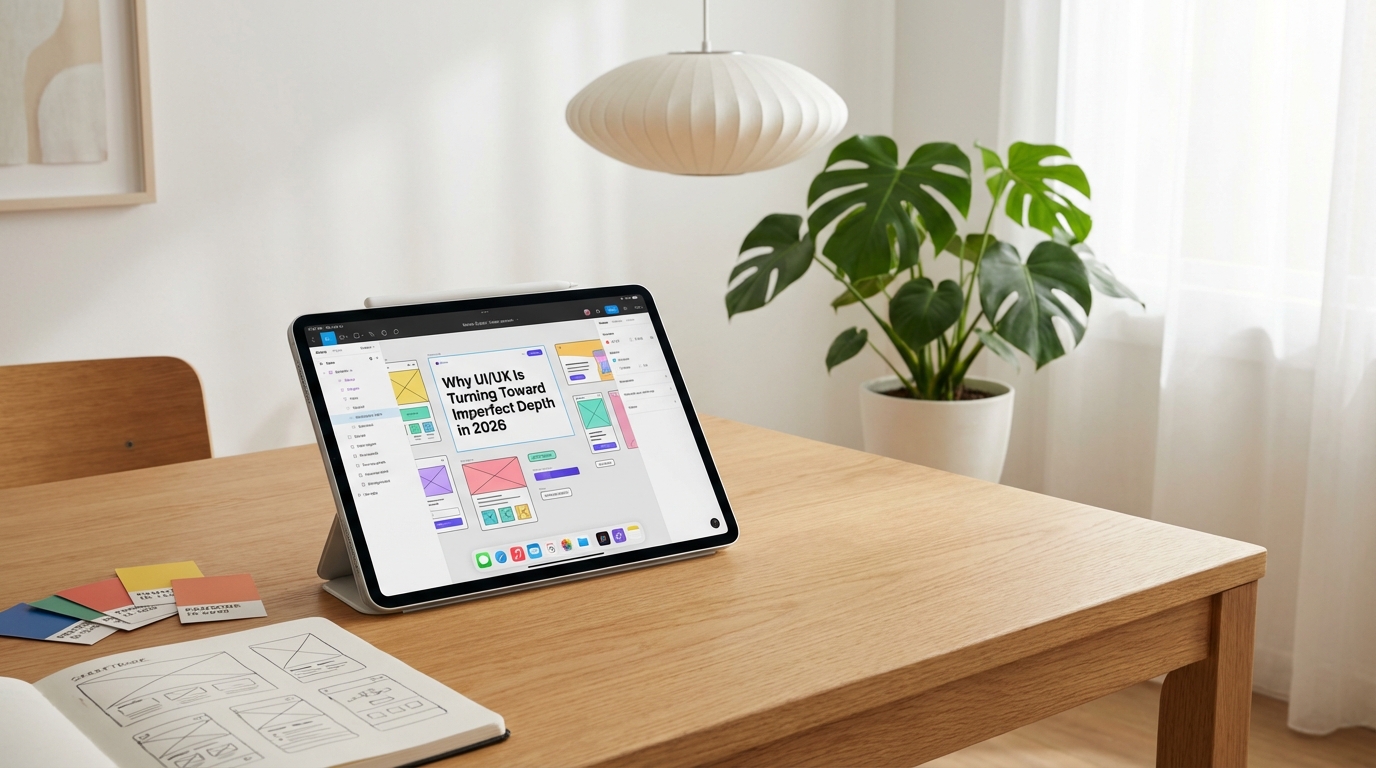
In 2026, UI/UX design sheds the sheen of AI-generated perfection for something rawer, more human. Immersive 3D elements, asymmetrical layouts, and bold typography signal a pivot from sterile minimalism to experiences that pulse with personality. Brands like Nike and IKEA pioneer this through WebGL-powered 3D models and AR previews, letting users spin shoes or tour spaces virtually, bridging the gap between screen and reality.[3] This isn't mere novelty; it's a deliberate embrace of depth that reduces purchase hesitation by making products tangible before commitment.[1][3]
Consider the rejection of grid-bound symmetry. Designers now craft hand-built collages, analog textures, and intentional imperfections—childlike scrawls layered over digital backdrops—to guide attention organically.[4] These asymmetrical compositions create visual tension, drawing eyes where intuition leads rather than rigid rules dictate. It's a quiet rebellion against the frictionless polish of recent years, where every element felt machined. Instead, layouts evoke the tactile chaos of physical magazines or mood boards, fostering dwell time on landing pages that feel alive.[1][4]
Interfaces are moving away from fixed layouts and toward dynamic, adaptive, living systems—less about screens, more about behavior.[2]
This evolution reflects a broader cultural hunger for authenticity amid algorithmic sameness. Polished UIs, once aspirational, now blur into indistinguishability. The asymmetrical turn injects brand-specific vibes, helping agencies carve niches in saturated markets.
Typography as Emotional Anchor
Bold, expressive typography emerges as the heartbeat of these designs, transforming text from functional labels into narrative drivers. Oversized, kinetic fonts—scripts dancing with monospace—command hero sections, as seen in Glossier's layered headlines or Samsung's responsive variables.[3] These aren't static; they animate on scroll or hover, turning calls-to-action into magnetic pulses that reportedly lift clicks by 20-30% in youth campaigns.
Yet this boldness pairs with subtlety. Variable fonts adapt weight and width contextually, responding to user interactions without overwhelming. It's emotional storytelling at scale: a neon-script headline might evoke Y2K nostalgia for one user, while kinetic motion underscores urgency for another.[2][3] In lifestyle sectors, this maximalist approach—layered with neon gradients and high-contrast hues—replaces muted palettes, channeling 'dopamine design' from brands like Lush and Spotify.[3]
The provocation here lies in balance. Vibrancy risks chaos, but when tethered to intent, it amplifies engagement. A/B tests reveal these palettes boost interaction in feeds, evoking joy through retrofuturism's grainy warmth.[4] For businesses, it's an invitation to audit current sites: do your CTAs whisper, or do they demand presence?
- Oversized headlines with motion for instant impact.
- Unconventional pairings (e.g., script + monospace) for memorability.
- Contextual animation tied to user gestures for intimacy.
Personalization's Empathetic Edge
At the core of 2026's trends beats data-driven personalization, now infused with emotional intelligence. Interfaces adapt in real-time to time of day, stress signals, or behavior patterns—shifting from segmented cohorts to moment-based tailoring.[1][2] With 32% of designers forecasting major impact and 36% already implementing AI variants, this isn't hype; it's infrastructure.[1]
Ambient AI lurks subtly: navigation flexes with content, cards refract on motion, surfaces respond to context.[2] Multi-modal inputs—touch, voice, gesture—orchstrate conversations, not mazes, making products feel anticipatory.[2][5] Emotional cues deepen this: an interface might soften hues during late-night sessions or simplify flows post-error, building trust non-intrusively. Agencies report 15-25% conversion lifts, but the real win is loyalty—users feel seen, not surveilled.[1]
Accessibility anchors this empathy. WCAG compliance, reduced motion options, and screen-reader harmony ensure inclusivity, especially as AR expands into retail and healthcare.[1][3] Load times under two seconds combat 50% mobile bounce rates, while sustainable practices like lean code minimize carbon footprints.[3] Privacy-first patterns and transparent AI disclosure address trust erosion, vital as agentic AI agents act autonomously.[1][6]
Thought-provoking: as UI commoditizes via design systems, deeper curation—taste, research, judgment—becomes the differentiator. Surface polish yields to systemic depth; AI builds buttons, humans craft resonance.[6]
Living Interfaces, Human Futures
Motion design and micro-interactions revive thoughtfully, with 23% of designers eyeing major influence and 50% already embedding them.[1] Scroll-triggered 3D, fluid transparencies, and adaptive layouts create 'living' UIs that evolve with users, prioritizing sensation over static features.[2] Retrofuturism blends nostalgia's grain with forward thrust, while mixed reality weaves into daily flows via voice and XR.[4][5]
For digital agencies, this demands new fluency: spatial tools for 3D, AI for personalization, audits for ethics. Businesses prioritizing these—immersive depth, imperfect personality, empathetic adaptation—don't just engage; they retain by mirroring life's messiness.
The horizon challenges complacency. Standardized UIs are AI's domain; what endures is the curated, contextual, human. In 2026, design isn't decoration—it's the quiet architecture of connection, urging brands to design not for screens, but for souls.